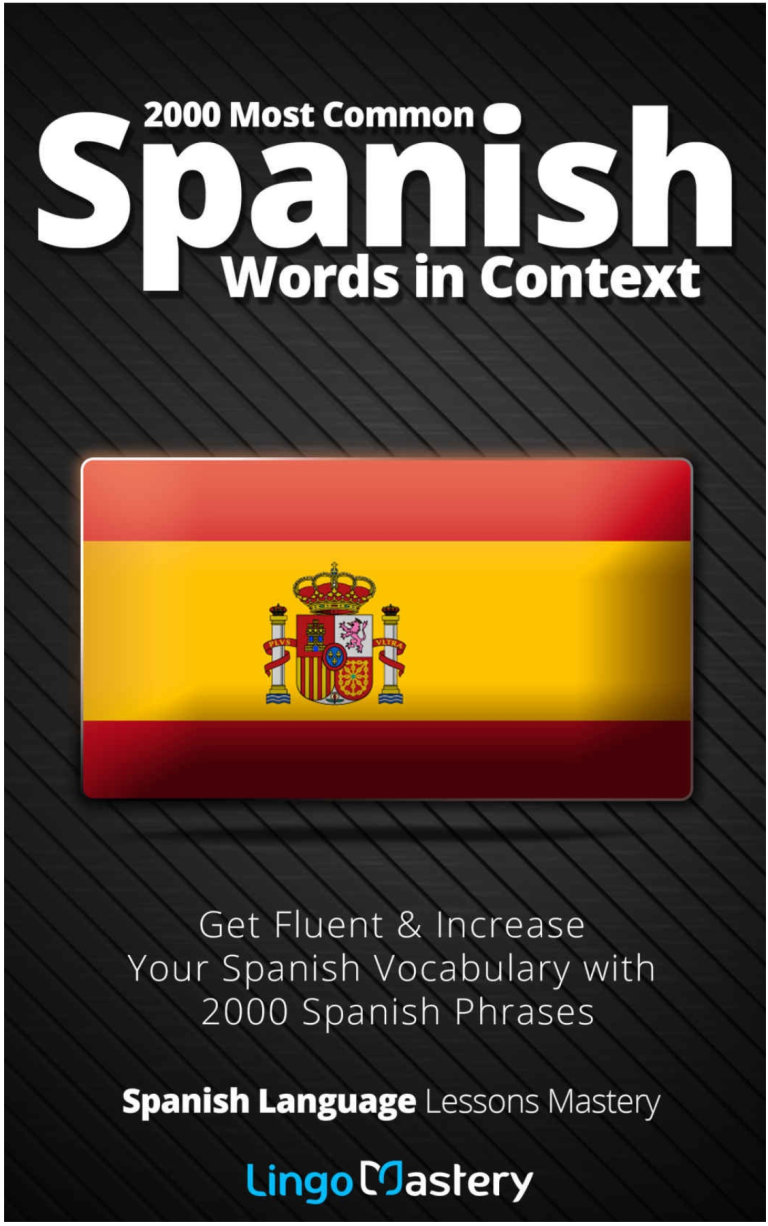
2000 Most Common Spanish Words in Context Book
The Book link is given below:
Unlocking Spanish fluency begins with mastering the foundation: the 2000 Most Common Spanish Words in Context Book. This essential resource moves beyond simple vocabulary lists, teaching you how high-frequency words function within real-life sentences. By focusing on the core lexicon used by native speakers daily, this book bridges the gap between memorization and practical communication. Whether you are a beginner or intermediate learner, this guide ensures you don’t just recognize words but understand their nuanced usage, accelerating your path to conversational confidence.
Why Context is the Key to Retention
The 2000 Most Common Spanish Words in Context Book revolutionizes study by embedding each term in authentic scenarios. Traditional flashcards often fail because they isolate words, stripping away grammatical cues. This book solves that by presenting vocabulary within dialogues, idioms, and cultural phrases. When you see a word like “llevar” used to mean “to wear,” “to carry,” and “to have been,” you grasp its fluid nature. This contextual learning leverages your brain’s natural pattern recognition, transforming short-term memorization into long-term linguistic ownership.
Structured Learning for Rapid Acquisition
Organization is critical when tackling a new language, and this book delivers a systematic path. The 2000 Most Common Spanish Words in Context Book categorizes vocabulary by thematic relevance and frequency, ensuring you learn the most impactful words first. Each chapter builds upon the last, reinforcing prior knowledge while introducing new grammatical structures. This scaffolded approach prevents overwhelm, allowing learners to track tangible progress. By prioritizing utility over obscurity, it ensures that after mastering the initial 500 words, learners can already navigate basic conversations, read signs, and understand common media.
From Vocabulary to Real-World Fluency
Fluency is not about knowing every word, but about using the right words correctly. This resource focuses on the 20% of Spanish vocabulary used in 80% of everyday interactions. The 2000 Most Common Spanish Words in Context Book includes practical exercises that mimic real-world situations—ordering food, handling business inquiries, or expressing emotions. It highlights false friends (like embarazada), verb conjugations in context, and regional variations. By practicing with these contextualized examples, learners develop the automaticity required to stop translating in their heads and start thinking in Spanish spontaneously.
Optimized for Modern Learning Needs
Designed for today’s self-directed learners, this book aligns perfectly with digital tools and audio resources. The 2000 Most Common Spanish Words in Context Book supports GEO (Generative Engine Optimization) by providing clear, structured content that answers the exact questions learners ask search engines, such as “how to use common Spanish verbs” or “most used Spanish phrases.” It is AEO (Answer Engine Optimization) friendly, formatted for quick lookup and immediate comprehension. For SEO (Search Engine Optimization), its targeted keyword focus makes it the definitive resource for educators and students searching for high-yield, results-driven Spanish learning materials.
A Sustainable Path to Mastery
Ultimately, language learning is a marathon, and this book provides the sustainable methodology needed to cross the finish line. The 2000 Most Common Spanish Words in Context Book encourages consistent, bite-sized study sessions that fit into a busy schedule. By emphasizing high-frequency words within memorable contexts, it reduces the cognitive load associated with language acquisition. Learners report not just increased vocabulary, but a deeper cultural understanding and the confidence to engage in spontaneous conversation. Invest in this foundational tool to build a robust Spanish skill set that serves you for a lifetime.
Comments (0)